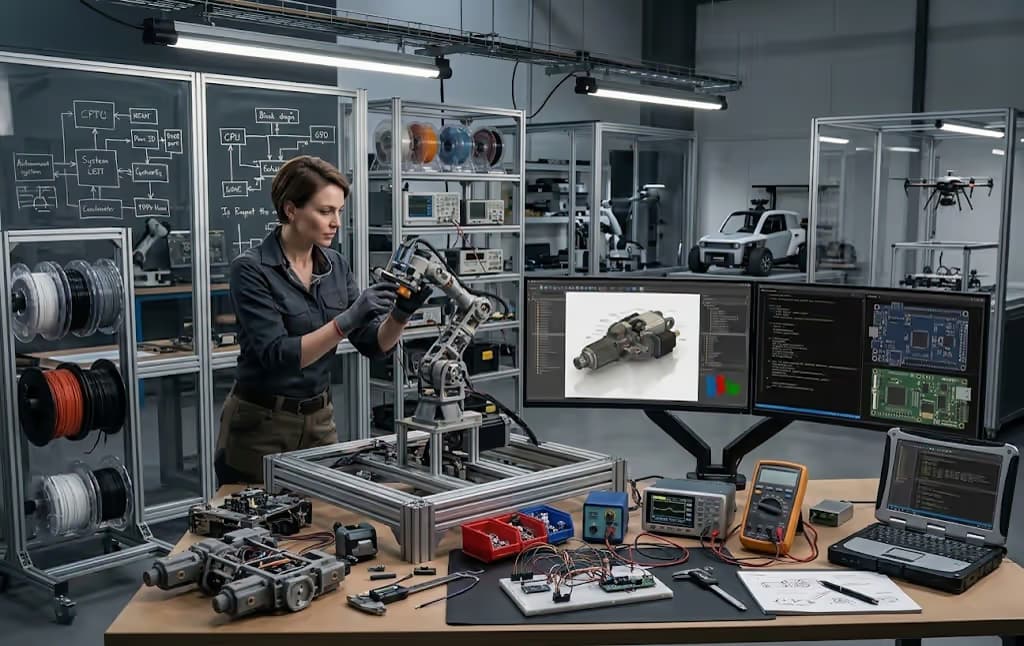
3D Product Development: From Concept to Market-Ready Design
3D Product Development: From Concept to Market-Ready Design
Turning an idea into something real takes more than just creativity, honestly. Real planning, technical design, accurate modeling, and genuinely understanding how the finished thing will actually behave once it's out in the world — that's the whole game here. 3D product development is really what makes that possible, taking rough early concepts and turning them into detailed digital models that can actually be evaluated, refined, tested, and readied for manufacturing.
For startups, entrepreneurs, product designers, and established manufacturers across the USA, 3D product development opens up a genuinely practical path to test ideas before committing serious money to physical production. Consumer electronics, household goods, industrial equipment, mechanical parts — across the board, three-dimensional design helps teams actually grasp a product's structure, look, and function the whole way through development.
What Is 3D Product Development?
Strip it down, and 3D product development is really just the process of building and refining three-dimensional digital representations of products using specialized CAD software. These models communicate dimensions, shapes, components, and how mechanical pieces relate to each other, all before anything physical ever gets built.
A sketch can only tell you so much. A 3D model, though, lets designers and engineers actually look at a product from every angle and adjust individual features without starting from scratch. Depending on what the project calls for, the model might also feed into engineering analysis, assembly planning, realistic rendering, or groundwork for prototyping later.
A properly structured 3D product development process ties the creative side of a concept to real engineering requirements. That combination helps teams spot design limitations early and make genuinely informed calls on materials, dimensions, usability, and manufacturing methods before anything's set in stone.
Why 3D Product Development Matters for Modern Businesses
Product development means making calls that genuinely shape manufacturing costs, performance, quality, and whether customers actually end up happy with the result. Making those decisions without a clear picture of what you're actually building just invites unnecessary risk into the process.
Three-dimensional modeling gives everyone involved a far clearer sense of what's actually being built. Designers get to check proportions, engineers can examine how components actually relate, and manufacturers can judge whether the whole thing even fits their production setup.
Better Visualization of Product Concepts
A digital 3D model turns a rough idea into something people can genuinely look at and discuss together. Businesses get to review shapes, dimensions, surface details, and component placement long before any physical prototype gets built.
This genuinely matters when you're trying to explain a complex product to investors, manufacturing partners, internal teams, or potential customers — a model just communicates things a written description never quite manages.
Fewer Design Errors
Detailed digital models make catching certain design problems a lot easier before manufacturing even starts. Designers can check component clearances, assembly relationships, and dimensional requirements, catching potential issues way earlier than they'd otherwise show up.
Modeling won't eliminate every engineering risk out there — nothing really does — but it genuinely cuts down avoidable mistakes and keeps the whole development process a lot more organized overall.
More Efficient Product Iterations
Product designs basically never stay the same throughout development. Customer feedback, engineering requirements, manufacturing limitations — any of these can trigger several rounds of revision before things settle.
With 3D product development, teams can actually tweak digital geometry and test alternative setups without physically rebuilding the whole concept after every single change. That makes evaluating a design a lot more manageable and genuinely speeds decision-making up across the board.
The Main Stages of 3D Product Development
A successful project genuinely does follow a structured workflow — one connecting the original concept all the way through to what the final product actually needs to be.
Concept Planning and Requirements
Everything kicks off with actually understanding the product idea, who it's for, what it needs to do, roughly how big it is, the budget, and the manufacturing goals behind it all.
Designers and engineers nail down the technical requirements that'll guide the whole project from here on out. Getting this part clear early genuinely saves a lot of unnecessary revisions down the line.
3D CAD Modeling
Once the concept's actually locked in, it gets developed into a proper three-dimensional CAD model. This stage covers shaping things out, defining dimensions, positioning components, and building the geometry needed for whatever evaluation comes next.
Depending on the project, this model might represent a complete product, a single mechanical part, or a multi-part assembly — scope really varies quite a bit here.
Design Refinement and Engineering Review
The initial model gets reviewed for practical usability, structural considerations, component compatibility, and manufacturing constraints — the stuff that actually matters once it's being produced.
Where it genuinely makes sense, engineers bring in simulation or finite element analysis (FEA) to dig into specific structural or thermal questions. These analyses only really hold up when they're built on accurate assumptions, suitable material data, and the right boundary conditions.
Prototyping and Validation
A digital model can feed straight into physical prototype development through methods like 3D printing, CNC machining, or whatever manufacturing process actually fits the job.
Prototypes let teams actually check fit, ergonomics, assembly, and specific functional characteristics in the real world, not just on a screen. Whatever testing turns up then feeds back into further design revisions.
Manufacturing Preparation
- Once the design's refined and validated to the level it actually needs to be, the project moves toward real production planning.
- Depending on what's being delivered, that might mean detailed CAD files, engineering drawings, tolerances, assembly information, and manufacturing-ready exports.
- The whole point here is handing production teams clear technical information so they genuinely understand the intended design — no guesswork, no assumptions left hanging.
Industries That Benefit from 3D Product Development
Three-dimensional product design supports a genuinely wide range of industries, since businesses across different sectors all need reliable ways to develop and actually communicate product concepts to each other.
- Consumer products — household accessories, electronics enclosures, kitchen products, everyday equipment
- Automotive and transportation — mechanical components, interior parts, brackets, housings, supporting assemblies
- Industrial manufacturing — machine components, equipment housings, fixtures, tools, custom mechanical parts
- Medical product design — selected device enclosures, accessories, and concepts developed according to applicable technical and regulatory requirements
- Electronics — product casings, internal layouts, mounting features, component packaging
- Startups and inventors — early-stage product concepts that need detailed modeling and prototype evaluation before any real production investment
Which workflow actually fits depends on the product's complexity, performance requirements, intended manufacturing method, and whatever industry standards apply to that specific space.
Choosing the Right 3D Product Development Services
Picking a development partner takes more than just judging how polished their visual design work looks on a portfolio page. You genuinely want to know whether the provider actually understands the engineering and manufacturing requirements tied to your specific project.
What a Good Partner Brings to the Table
What to Look For
- Experience with relevant CAD tools
- A solid grasp of mechanical design principles
- Real assembly modeling experience
- Technical drawing capability
- Prototype preparation know-how
It's also genuinely worth pinning down exactly which deliverables you'll actually get, and whether revisions are included in the project scope before anything gets signed.
At CADverse Engineering, businesses can explore product design and engineering support genuinely built around their actual development goals. A clearly defined scope from the start keeps the design process aligned with practical project requirements — from the very first concept all the way through detailed modeling and prototype preparation.
How 3D Product Development Supports Cost Control
Design changes get a lot more complicated once tooling, material purchasing, or production has actually started. Catching potential issues during the digital development stage genuinely helps avoid unnecessary rework and wasted resources further down the line.
Take this as an example — a product team might discover two components actually interfere with each other during assembly. Fixing that in the model before manufacturing prevents the exact same problem from showing up in a physical product, which would've cost a lot more to fix after the fact, once tooling's already been cut.
That said, actual savings genuinely depend on project complexity, testing requirements, production volume, and how accurate the initial design assumptions turn out to be. Digital modeling should really be seen as one part of a broader product development and quality assurance strategy, not the whole solution standing on its own.
Frequently Asked Questions
What is 3D product development? It is the process of creating, refining, and evaluating digital product models before prototyping or manufacturing.
Which software is used for 3D product development? Common CAD tools include SolidWorks, Autodesk Fusion, Inventor, and other platforms selected according to project requirements.
Can 3D product development reduce manufacturing errors? Yes, digital modeling and engineering reviews can help identify certain design problems before production begins.
Is 3D product development suitable for startups? Yes, startups can use digital models to refine concepts, communicate designs, and prepare prototypes before committing to larger manufacturing expenses.
Can 3D models be used for prototyping? Yes, suitable models can support 3D printing, CNC machining, and other prototype manufacturing methods.
Final Thoughts
3D product development gives businesses a structured, genuinely reliable way to turn product ideas into detailed digital designs that can actually be reviewed, tested, and prepared for manufacturing. Put visualization, CAD modeling, engineering evaluation, and prototyping together, and you end up with noticeably better-informed decisions throughout the entire development process.
For companies, inventors, and startups across the USA, investing in a well-planned development workflow genuinely improves communication, supports real design refinement, and helps catch manufacturing challenges early rather than after they've turned into expensive problems. With the right technical approach and clearly defined requirements from the start, an initial concept can move confidently toward a practical, market-ready product design — and that's exactly the kind of support CADverse Engineering is built to provide, from the first sketch through to a design that's genuinely ready for its next stage.
Need help applying this to your product?
Discuss Your Project