Design for Manufacturing Service for Efficient Production
Design for Manufacturing Service for Efficient Production
A product looking good on a screen doesn't mean much if it's actually a pain to manufacture. That's really where a design for manufacturing service earns its keep — it gets production requirements reviewed early, cuts down on design changes that could've been avoided, and gives you a much clearer path from CAD straight through to actual manufacturing.
What Is a Design for Manufacturing Service?
A design for manufacturing service basically applies real manufacturing requirements while a product's still being developed, not after. Engineers go through geometry, materials, tolerances, processes, and assembly so the final design ends up easier and cheaper to actually produce.
The whole point is connecting product design with what manufacturing can genuinely deliver. Catching things early — complexity, production risk, features that don't need to be there — matters a lot more before tooling or bigger production commitments lock things in.
Key Benefits of Design for Manufacturing Service
A few areas tend to see the biggest payoff once a design for manufacturing service gets involved.
Cost Control
Better cost control is probably the benefit people notice first. Engineers look at materials, part geometry, production methods, and any unnecessary features that might be quietly driving up manufacturing effort or cost.
Common Cost Drivers to Check
- Material choice versus actual product needs
- Part geometry that's more complex than it needs to be
- Production method fit for the volume required
- Features that add cost without adding real value
Better Geometry
Through a design for manufacturing service, engineers refine part geometry specifically for whatever manufacturing process is actually being used. That review usually touches wall thickness, holes, clearances, draft angles, part complexity, and general production limitations.
Material Selection
Choosing the right material is a genuinely important part of this whole process. Strength, weight, temperature resistance, availability, finish, how it behaves during production — all of it needs to line up with both the product's requirements and the manufacturing method being used.
Tolerances
A proper design for manufacturing service review also digs into tolerances and dimensions. Tight tolerances push up machining and inspection requirements, so precision should really only go where the product's actual performance calls for it.
Manufacturing Methods and DFM
What a design for manufacturing service actually looks at shifts depending on the production method involved. CNC machining, injection molding, sheet metal, 3D printing — each one has its own capabilities and limits, so the design really needs to be built around whichever process is chosen, not forced into it afterward.
Prototyping and Production Readiness
Design work rarely stops at the drawing board, and a design for manufacturing service tends to connect into a few other stages along the way.
Prototyping
Pairing a design for manufacturing service with prototyping gives teams a real chance to physically test important decisions before committing further. CAD Verse Engineering, for example, offers DFM alongside prototyping, helping teams move from digital models toward something they can actually validate in hand.
Production Readiness
A structured design for manufacturing service process gets designs genuinely ready for manufacturing — refining geometry, documentation, tolerances, and quality requirements along the way. Clear engineering information also helps manufacturing partners actually understand the critical production details instead of guessing.
Quality
Quality tends to improve noticeably when a design for manufacturing service gets factored in before production starts. Catching manufacturability issues early gives teams a real shot at fixing design concerns before they turn into rejected parts, rework, or expensive changes down the line.
Faster Development
An efficient design for manufacturing service workflow shortens development overall by cutting down on major revisions after the design's supposedly finished. CAD Verse Engineering describes a workflow that ties DFM, prototyping, validation, and production handoff together into one continuous process.
Who Can Use a Design for Manufacturing Service
This isn't limited to one type of company. It genuinely helps different groups for different reasons.
- Startups and inventors — practical engineering guidance when there's no internal manufacturing expertise to lean on. Early review helps turn a rough concept into something realistically production-ready.
- Established businesses — useful for new products, redesigns, cost reduction, or recurring production headaches. Simplifying components, weighing alternatives, and prepping designs for different manufacturing processes all fall under this.
- USA product teams — remote design for manufacturing service gives access to real engineering support without needing an in-house specialist on payroll. CAD Verse Engineering says it supports global teams through remote engineering collaboration.
How Design for Manufacturing Service Works
A typical design for manufacturing service workflow starts with the basics — product goals, production volume, materials, and whichever process is intended. From there, engineers review CAD files, flag concerns, recommend changes, and refine the design before it actually moves into production.
Typical Workflow Steps
- Define product goals and production volume
- Confirm materials and intended manufacturing process
- Review CAD files for geometry and design issues
- Recommend and apply design changes
- Refine the design ahead of production
CAD Connection
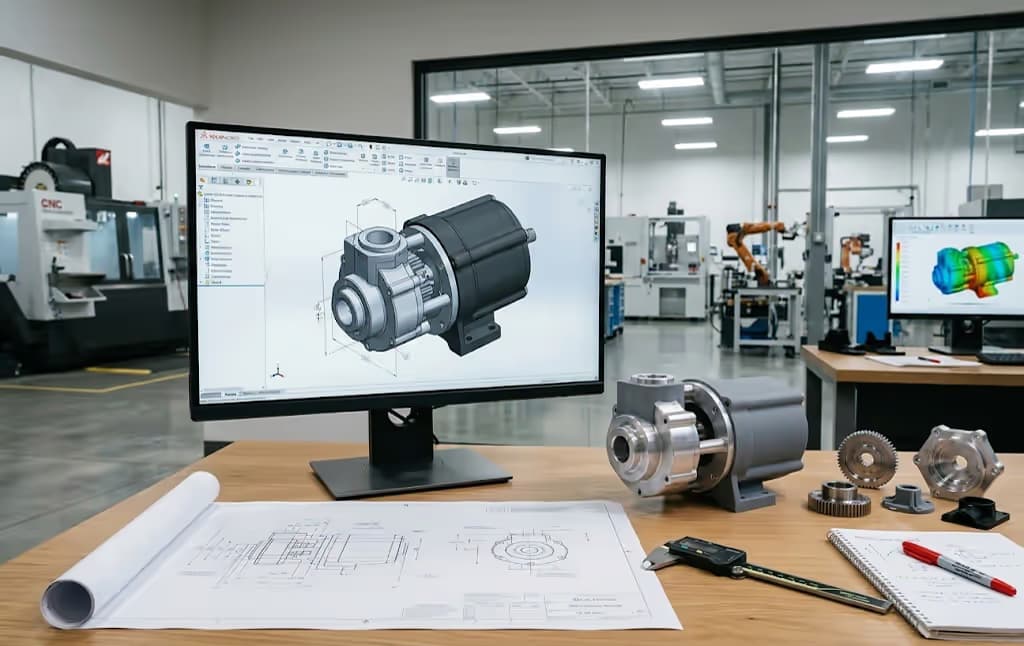
Accurate CAD sits right at the center of a design for manufacturing service. Detailed digital models let engineers actually examine dimensions, assemblies, and design details before anything physical gets made, while also supporting prototyping and manufacturing documentation along the way.
Reduce Rework
One genuinely practical purpose of a design for manufacturing service is cutting down late-stage rework. Autodesk points out that folding manufacturing restrictions into early design reduces how many changes are needed once a product actually reaches manufacturing.
Assembly Considerations
A solid design for manufacturing service review also looks at assembly, not just individual parts. Simplifying parts and assembly steps makes products genuinely easier to build, and DFM paired with DFA together covers both production and assembly efficiency.
CAD Verse Engineering
CAD Verse Engineering provides design for manufacturing service work that includes CAD/CAM analysis, manufacturability assessment, geometry refinement, cost reduction strategies, and quality planning. Related services on offer include prototyping, 3D printing, and general production support.
Frequently Asked Questions
What is a design for manufacturing service? It's an engineering service that reviews product designs against real manufacturing requirements to improve manufacturability, cost, quality, and overall production readiness.
When should DFM begin? Ideally a design for manufacturing service starts early, before tooling or major production commitments start limiting how much room there is to actually make changes.
Can DFM reduce production costs? Yes — a design for manufacturing service can catch unnecessary complexity, material choices, and other production considerations that end up affecting manufacturing costs.
Does DFM work with prototypes? Yes, a design for manufacturing service pairs well with prototyping to validate important design and production decisions before scaling up.
Who can use DFM services? A design for manufacturing service supports startups, inventors, manufacturers, and established product teams alike as they prepare designs for actual production.
Final Thoughts
A design for manufacturing service is really about closing the gap between what looks good on a screen and what actually works on a production line. Cost control, better geometry, smarter material choices, and fewer late-stage surprises all come out of catching things early rather than fixing them after the fact.
Whether it's a startup turning a first concept into something buildable, or an established business trying to cut recurring production issues, bringing a design for manufacturing service into the process early tends to pay off well before tooling and full-scale production ever begin.
Need help applying this to your product?
Discuss Your Project