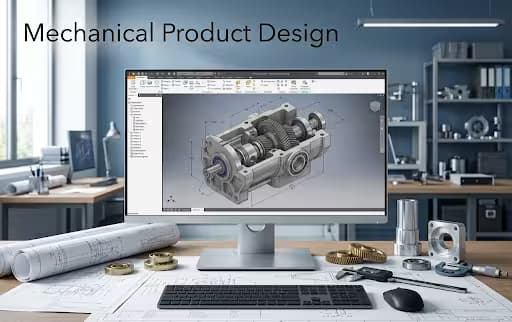
Mechanical Product Design: From Concept to Production Guide
Mechanical Product Design: From Concept to Production Guide
Mechanical design for products is essential to making reliable, practical manufacturing items. From the initial idea through to an actual design, each stage demands careful design, precise engineering and a keen eye for detail. An efficient mechanical design could improve the performance of your product, lessen manufacturing difficulties, and aid companies bring their concepts into the market faster.
If you are a company who are developing mechanical products of their own Working with skilled experts in engineering can aid in making the process of designing efficient and organized. Engineering CADVerse can provide solutions for engineering and CAD to support the process of product development starting from the beginning of concepts and ending with thorough design and documentation.
What Is Mechanical Product Design?
Mechanical product design refers to the process of developing and developing mechanical parts or products that function, are useful and appropriate for production. It is a blend of engineering concepts, CAD modeling, material factors dimension, tolerances and requirements for manufacturing.
The process could begin with an concept, sketch or product requirements. Engineers transform the concept into precise 3D diagrams as well as technical drawings which can be used to prototype and manufacturing.
The design of a mechanically-sound product will not just focus on the appearance of a product, but also how it functions and how the components work and how it is produced as well as how it will work in actual conditions.
Why Mechanical Product Design Is Important
A well-designed mechanical system can have a an immediate impact on the efficiency and quality of an item. Bad design decisions could cause manufacturing problems and unnecessary expenses, ineffective components or even performance issues.
Professional mechanical product design helps businesses:
- Design and create practical, functional products.
- Enhance product performance
- Reducing unnecessary use of materials
- Be aware of design challenges in the early stages
- Create a precise manufacturing document
- Enhance communication between the teams in manufacturing and engineering
- Make products that are simpler to make and put together
- Make less costly design changes during creation
The structured design process permits the possibility of problems to be identified prior to a product's stage of manufacturing.
Key Stages Of Mechanical Product Design
Mechanical design typically requires several steps. The specific process will depend on the size and specifications of the item.
1. Concept Development
It starts by understanding the concept behind the product, its requirements for use, design, dimensions, operating conditions as well as other specifications.
Concepts for the initial design can be made by sketching, reference, sketches, or designs needs. The aim is to create an unambiguous direction for the project.
2. 3D CAD Modeling
After the idea is established and the idea is defined, it can be converted into a complete 3D CAD design. The 3D model lets engineers visualise the item and to understand the connection between each component.
The CAD model can aid in identifying potential interferences problems, dimension issues, as well as assemblies issues before actual prototypes are created.
3. Design Development
It is possible that the initial model will require numerous design changes before it is ready for production. Engineers will be able to assess dimensions, relationships between components and materials, as well as manufacturing needs and the overall function.
Design development is a crucial step because minor changes implemented early could help prevent more serious issues during the manufacturing process.
4. Assembly Design
The products that contain multiple parts need be developed with the idea of assembly. Every component must be able to fit together with other components and permit maintenance and assembly when needed.
Modeling assemblies can aid in identifying problems with clearance, collisions and improper component placement.
5. Technical Drawings
Technical drawings that are detailed provide the manufacturer with all the details needed to make individual components. Drawings could include tolerances, dimensions and specifications for materials, as well as notes, as well as other production information.
Correct documentation can help minimize confusion and assures that the intention behind the design has been made clear.
6. Design Review
In the lead-up to production, the finished model should be evaluated with respect to the requirements of the first design. This review could include dimensions and functionality, as well as manufacturability assembly and any other specific project needs.
Any changes that are required can be implemented before it is time to move on to manufacturing or prototyping.
The Role Of CAD In Mechanical Product Design
Computer-aided designing, often referred to as CAD, is now an essential component of contemporary mechanical engineering. The CAD software lets engineers draw precise two-dimensional sketches as well as three-dimensional models, with more quality and flexibility.
An 3D CAD model is a an accurate representation of the product prior to it's actually manufactured. Engineers can alter design by using digital technology, test assemblies and create technical documents by using a model that has been created.
In the case of businesses, this could help to organize product development as well as enhance communication between designers makers, engineers, and the other stakeholders of the project.
Designing For Manufacturing
The product might look great on a computer-aided design model, but it could still pose a challenge during production when manufacturing specifications aren't thought of during the design phase.
Manufacturing design is focused on making products that can be manufactured efficiently with the right production methods.
Based on the type of product, the product's requirements could be:
- Material selection
- Production techniques
- Component dimensions
- Tolerances
- The requirements for machining
- Sheet steel fabrication
- Injection molding requirements
- Methods for assembly
- Methods for joining and fasteners
- Production quantity
Be aware of these aspects at the time of design helps to reduce manufacturing problems.
Mechanical Product Design For Prototyping
Prototyping is a way for businesses to test the product prior to committing to large-scale production. An accurate CAD model may provide the base for constructing the physical prototype.
The prototype helps to identify the practical aspects that may be difficult to identify when starting from a concept. Following testing and evaluating it is possible to have the design adjusted prior to final production.
This process is very beneficial in the case of new products in which the functionality, dimensions and assembly specifications are in the process of being improved.
Common Applications Of Mechanical Product Design
Mechanical design of products can be employed in many different sectors and in a variety of applications. It is a great tool for the design of components in their own right and full mechanical products.
Common applications are:
- Industrial equipment
- Machine components
- Consumer goods
- Automotive components
- Equipment for manufacturing
- Mechanical assemblies
- Metal sheet Products
- Housings and enclosures
- Fixtures and tools
- Custom engineering products
The method of design depends upon the requirements specific to each the manufacturing environment, operating conditions and the purpose for the item.
Common Challenges In Mechanical Product Design
Mechanical product development may pose many issues. The most common challenge is turning an idea to an actual design that is able to meet production and technical requirements.
Others challenges could comprise:
- Maintaining accurate dimensions
- Managing component clearances
- The right materials to choose
- Monitoring manufacturing tolerances
- In the design phase, it is important to consider how you can make assembly more efficient.
- Eliminating unnecessary complexity
- Making precise technical drawings
- Balance between manufacturing performance and production cost
Ahead of these concerns, you will help to create an efficient and reliable end-to-end concept.
Why Work With Professional Mechanical Design Engineers?
A professional engineering assistance can be beneficial in the case of products that require intricate assemblies, parts and manufacturing specifications, as well as specific technical documentation.
A skilled mechanical design team can assist convert ideas into precise engineering models that are ready for production documents. Expert input is also able to find design flaws prior to them causing costly production changes.
If you are a business that is developing a brand new product, or improving the existing product, having a structured engineering assistance can help aid in making the process of developing a product much more efficient.
Choosing A Mechanical Product Design Service
When choosing a mechanical design company, think about the experience of the firm, its technical capabilities, CAD skills as well as the communication method and the ability to recognize your individual needs.
It's also crucial to know if the provider can provide the kind of products and services your project needs for example:
- 3D CAD models
- Technical drawings in 2D
- Models for assembly
- Product development support
- Manufacturing documentation
- Changes in design
- Prototype-ready designs
A clear communication channel between the client and the engineering team is crucial in achieving the goal.
Frequently Asked Questions
What Is Mechanical Product Design? Mechanical product design refers to the process in engineering that develops mechanical components and products from an the initial idea to detailed useful, practical and manufacturable design.
Why Is CAD Important In Mechanical Product Design? CAD permits engineers to design precise 2D diagrams as well as 3D models. It allows engineers to create assemblies, visualize their products and design modifications, and create technical documents.
Can Mechanical Product Design Include Existing Products? Yes. Mechanical design services are able to support the development of new products in addition to changes, enhancements, and redesigns and the improvement of products that are already in use, based on the needs of the project.
What Deliverables Can A Mechanical Design Project Include? The outputs of a project can differ however, they could include 3D models created by CAD, 2D technical drawings, assembly models, and production documents.
Why Is Design For Manufacturing Important? Manufacturing design helps to make sure that the product can be manufactured efficiently, taking into consideration materials production processes as well as tolerances, assembly as well as other requirements for production.
Final Thoughts
Mechanical design of products is more than creating a simple 3D model. It requires transforming an idea into a functional product looking at the dimensions, functionality material, manufacturing construction, and the technical specifications.
A well-organized design process can aid businesses in identifying potential issues earlier, speed up the development of products, and create prototypes or designs to be used in manufacturing. If you're developing the next product, redesigning an element that is already in use or developing a new mechanical system, expert mechanical design assistance can assist in turning your design idea into an accurate and useful concept.
Need help applying this to your product?
Discuss Your Project